All Categories
Featured

Programmable Network Control for Enterprise SEO Operations
Table of Contents
: Why growth rises demand flexible cloud infrastructure (not direct). Six finest practices for building a scalable cloud technique. The five core pillars of a cloud method structure (governance, architecture, operations, FinOps, security). How to choose the right cloud release model (public, private, hybrid, multi-cloud). The role of AI, ML, and automation in cloud operations.
The genuine question is: When the time comes, will you control your scaling, or will it control you? By 2025 (established in 2015), they blew up to 25 million users. And for that to take place, enterprises must: Align infrastructure with organization ambition (like Revolut's cloud method mirrored their international growth roadmap) Automate scalability; don't just react to demand however expect it Deal with compliance as code because scaling firmly > scaling quickly With so much focus on scalability, it's vital to understand how to ensure your cloud method delivers it.
You require a business-first frame of mind to keep your cloud strategy focused, scalable, and transformational. A genuinely scalable cloud method starts with clear company goals.
If your cloud financial investments aren't improving crucial metrics, it's time to pivot. Rushing into the cloud without a solid plan or weak method structure typically leads to increasing expenses, security spaces, and underperforming systems.
The Future of Advanced SEO Platforms in 2026
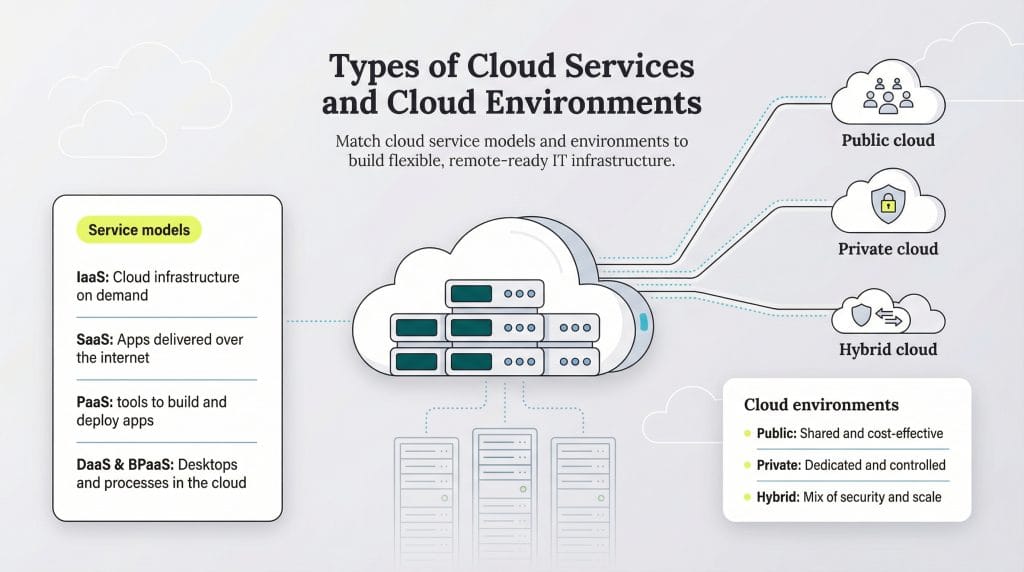
Governance: Define clear policies around work positioning, compliance, and access control. Architecture: Design the right cloud architecture that fits your objectives, whether it's public, private, hybrid, or multi-cloud, guaranteeing it supports scalability, performance, and cost effectiveness. Operations: Make your operations resilient with integrated cloud tracking, automated reactions, and 24/7 assistance.
Security: Ensure that security is embedded into every stage (from planning to deployment) to proactively handle threats and protect information. A cloud method developed on these pillars sets the phase for sustainable growth, innovation, and long-term worth. Delving into the cloud with a one-size-fits-all state of mind, frequently defaulting to the greatest provider, can backfire.
A Deloitte research study found that 84% of companies see enhanced scalability and 78% report better work distribution with a multi-cloud technique. Leveraging microservices, containers, and serverless, Following an API-first approach, and Utilizing cloud-agnostic tools (such as Anthos, Azure Arc, or HashiCorp) are a few great methods to future-proof your cloud method.
Cloud SEO Resource Optimization for High-Volume Networks
Facing information sovereignty guidelines? A personal or hybrid cloud model gives you control and compliance. You may require to stay on-prem or at the edge.
The best cloud deployment design isn't about choosing the greatest company but about aligning infrastructure with service goals and designing for scalability from the start. Cloud adoption brings versatility but likewise presents new dangers that many companies discover the difficult way.
It turns out that, as systems become more intricate, the standard trust but validate security method isn't enough. To navigate around this, companies of today require accept the Absolutely no Trust design where no user, device, or application is instantly relied on.
Ever felt amazed by your cloud bill at the end of the month? In other words, business that ignore AI-ready cloud strategies now will likely have a hard time in the future., constructing a scalable data pipeline, and moving to self-healing, automated architectures, are a couple of techniques that can work.

Latest Posts

Technical Insights into 2026 SEO Ecosystem Stability
Why Enterprise Cloud Ecosystems Transform ROI

Architecting Robust Cloud SEO Ecosystems